





The Company Group has applied a systematic waste management system, involving the segregation, storage, transportation and disposal for both hazardous and non-hazardous waste in accordance with relevant environmental laws and requirements. In addition, the Group encourages waste reduction, reuse and recycling for resource optimization. Disposal suppliers are controlled, monitored and audited, including via periodical visits to disposal sites, to ensure their compliance with relevant laws and requirements and to prevent environmental impacts.
Target and Waste Management Guidelines
| Targets | Operational guidelines | Performance | |
|---|---|---|---|
| Hazardous waste | Zero Hazardous Waste to Landfill |
|
Volume of hazardous to landfill accounted for 0.61% (35.52 tons) due to local suppliers’ limited capacity. |
| Non-hazardous waste | Volume of general waste at Head Office not exceeding that of the base year (2024), 1,544 kg/month (equivalent to 5 kg/person/month) | Volume of general waste for Nonthaburi Municipality’s disposal was at 1,441 kg/month (equivalent 4.8 kg/person/month), which was in line with the target set. | |
Compared with 2024, total waste generated in 2025 increased within the reporting boundary of power plants in Thailand under the Company’s financial control, mainly due to the full recognition of waste from both generating units of Hin Kong Power Plant. The proportion of waste reused also increased, with around 53% consisting of sludge from the water treatment system that can be reused for other purposes, such as fertilizer materials.
| Indicators | Unit | 2025 | 2024 |
|---|---|---|---|
| Total waste | ton | 5,850 | 2,578 |
| Percentage of waste diverted from disposal by recovery operations | % | 36.77 | 2.11 |
| Number of non-compliance incidents | time | 0 | 0 |
Most of power plants’ waste is related to maintenance activities, both major overhaul and minor maintenance, and the annualized volume varies. The Company has applied the 3R principle in managing the waste and hired authorized disposal service providers with methods that minimize impacts on the environment and ecosystem. Reuse and recycling is the first priority, followed by energy recovery or incineration or safe landfill for waste that could be disposed of the said methods.
Example of supplier audit for unused material disposal
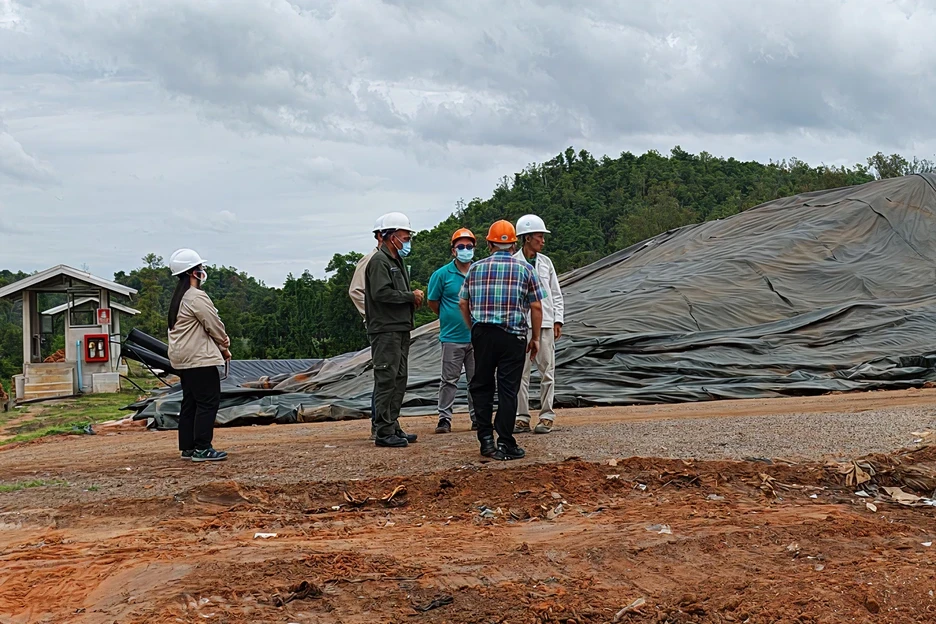
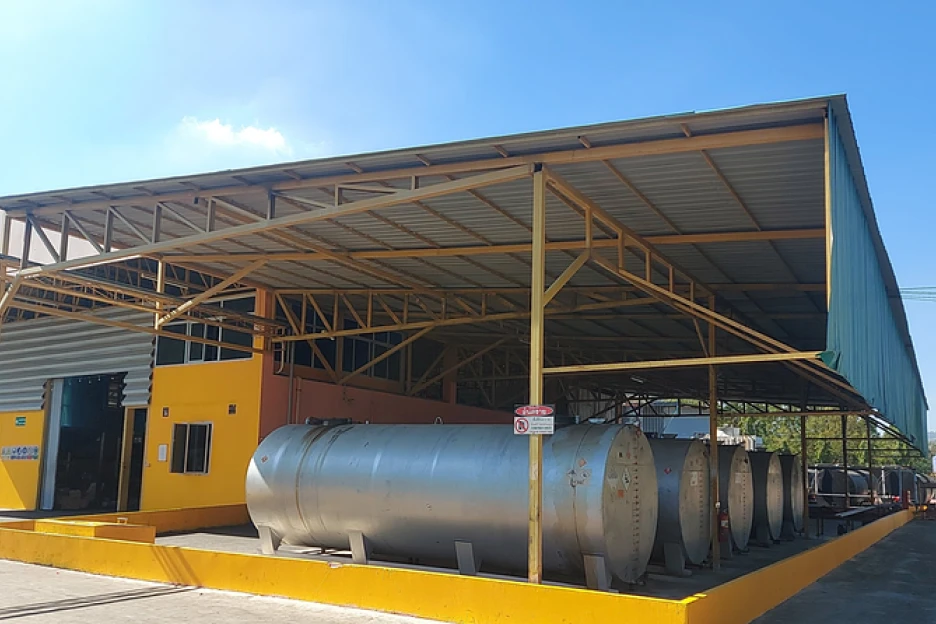
Hin Kong Power Plant in Ratchaburi Province conducted an audit of the supplier hired to dispose unused materials at its site, to ensure the supplier complies with relevant legal and requirements without causing impacts on the environment and community. The power plant examined the supplier’s registration of incorporation; the Department of Industrial Work’s permit; relevant certified standards such as ISO14001 and ISO45001; operational controls concerning transportation, storage, leakage prevention, emergency response plan, accident reporting system; legal compliance assessment reports; complaint/ recommendation channels and handling procedures; and enforcement of personal protection equipment, in order to ensure confidence that the waste disposal contractor complies with applicable laws and requirements without causing impacts on the environment and surrounding communities.
Waste Management Training
The Company recognizes that sustainable organizational development begins with fostering awareness and engagement among employees at all levels, particularly in waste management. As power generation and related operations involve significant resource use and potential waste generation, the Company emphasizes building knowledge and understanding of resource reduction, waste segregation, reuse and recycling practices, as well as proper waste handling in compliance with applicable regulations, in order to minimize landfill disposal and mitigate long-term environmental impacts.
The Ratchaburi Power Plant conducted an online 'Environmental Behavior and Awareness' training program. The curriculum covered key topics including resource reduction, waste segregation, reuse and recycling practices, and proper waste handling. The training was attended by 169 participants, including employees and representatives from contractors and suppliers. All participants (100%) successfully passed the post-training assessment, demonstrating their understanding and readiness to apply the knowledge in practice to enhance waste and environmental management in operations.