




Mr. Jiraroj Lanchanavanich
- Independent Director
- Chairman of the Risk Management Committee
- Member of the Audit Committee

Assoc. Prof. Kulyos Audomvongseree, Ph.D.
- Director
- (EGAT’s Representative Director)
- Chairman of the Investment Committee
- Member of the Risk Management Committee
- Member of the Human Resources and Remuneration Committee
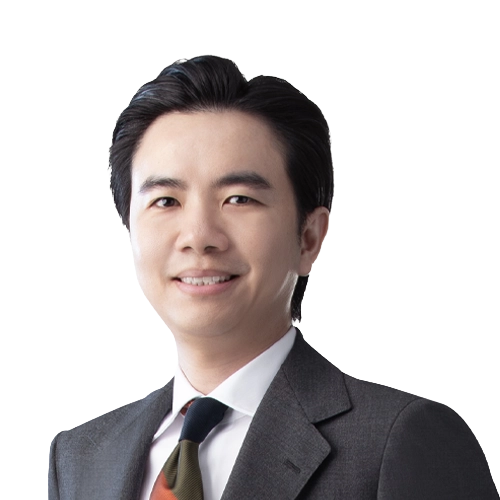
Assoc. Prof. Takoon Siriyutwatana, Ph.D.
- Director
- (EGAT’s Representative Director and Authorized Director)
- Chairman of the Human Resources and Remuneration Committee
- Member of the Risk Management Committee
- Member of the Investment Committee

Chayanan Pakdeejit, Ph.D.
- Independent Director
- Member of the Corporate Governance and Sustainability Committee
- Member of the Risk Management Committee
The Risk Management Committee serves a term of three years. A director retiring by rotation may be re-elected. The Committee report directly to the Board of Directors and perform their tasks as assigned by the Board of Directors.
Duties and Responsibilities of the Risk Management Committee
- To review the Company’s risk management policy and framework, which would cover all the major risks; namely financial risk, investment risk, and corporate reputation risk, before proposing them to the Board of Directors for approval.
- To formulate risk management strategies and framework in compliance with the Company’s risk management policy. The Committee shall assess, monitor and control risk at the appropriate level.
- To monitor and ensure that risk management activities are in line with the Company’s policy and framework approved by the Board of Directors.
- To set risk measurement criteria and acceptable risk level.
- To set appropriate risk management measures to cope with different situations
- To review the adequacy and effectiveness of risk management policy and system as well as the compliance with the established policy.
- To report regularly to the Board of Directors about the management, operation, risk status, changes and areas of improvement to ensure the compliance with the Company’s policy and strategy.
- To appoint a risk management working group as necessary.
- To provide the risk management working group with necessary factors, such as personnel, budget and other resources as per the scope of their responsibilities.

RISK MANAGEMENT COMMITTEE’S REPORT
To Shareholders and Stakeholders
RATCH Group Public Company Limited recognizes the importance of risk management by integrating risk management with its goals, mission, and vision, in accordance with the Company’s risk management approach. The Company also integrates risk management with strategy and performance under the Enterprise Risk Management – Integrating with Strategy and Performance framework of the Committee of Sponsoring Organizations of the Treadway Commission (COSO). This framework is used as a strategic tool to drive organizational management, create, maintain, and enhance value, reduce losses and risks that may cause damage, and strengthen the Company’s capability and capacity to achieve its objectives and sustainable growth.
In 2025, the Company faced an increasingly complex and uncertain business environment arising from multiple factors, including geopolitical conflicts; the impacts of policies of leading countries, particularly the United States, which affect the global economy and the energy sector; climate change; as well as economic and social challenges and threats to information systems and digital data. These factors are interconnected and have a significant impact on the Company’s business operations.
The Company’s risk management is under the oversight of the Risk Management Committee, which comprises a total of 4 members: 3 independent directors and 1 director representing the Electricity Generating Authority of Thailand (EGAT). Mr. Jiroroj Lanchanavanich, an independent director, serves as the Chairman of the Risk Management Committee, together with Mr. Praphaisith Tankeyura and Mr. Kriengkrai Rukkulchon, who are independent directors, and Mr. Kulyos Audomvongseree, the EGAT’s representative director. The Committee is responsible for overseeing, reviewing, and monitoring the Company’s risk management to ensure that it is conducted efficiently and with due care, and in alignment with the Company’s strategy.
In 2025, the Risk Management Committee convened a total of 4 meetings, all of which were attended by all members. The key matters addressed during the year are summarized as follows:
- Reviewed the Company’s risk management policy, risk assessment framework, and risk appetite in order to further improve the risk assessment and risk management processes and to ensure alignment with the Company’s direction and the continuously changing environment.
- Considered risk assessment criteria, corporate-level key risk indicators, and the root causes of principal risks, covering significant risk categories such as strategic risk, operation risk, financial risk, compliance risk, and emerging risks, including information technology and cybersecurity risk and personal data protection (PDPA), as well as risks and opportunities arising from significant technological changes.
- Considered risk management plans for climate change risk, sustainability risk, foreign investment risk, electricity tariff policy risk, geopolitical risk, and human resource development risk to support business growth, and monitored and supported the implementation of risk management actions.
- The Risk Management Committee placed importance on monitoring and managing risks with an increasing trend and potential impact on the Company’s business operations, particularly geopolitical and regulatory risks that are complex and subject to rapid changes in multiple regions, which may affect economic stability, energy policies, and investment decisions. The Committee also focused on uncertainties surrounding the sustainability of international environmental policies, which influence the direction of the energy transition, sustainable business operations, and compliance with relevant requirements, together with the management of global cybersecurity risks that have become more severe and complex and may affect business continuity, information system security, and stakeholder confidence. In this regard, the Risk Management Committee oversaw the Company’s systematic assessment, monitoring, and determination of appropriate risk management measures in alignment with corporate strategy, to enhance resilience to uncertainty and support stable and sustainable long-term growth.
- The Risk Management Committee placed importance on fostering a risk management culture across the organization, aiming to cultivate awareness and participation in risk management among executives and employees at all levels as part of day-to-day operations, together with the development of relevant knowledge, understanding, and skills. This supports systematic risk identification, assessment, and management in alignment with the Company’s strategy, and enables appropriate responses to changes in the business environment, leading to prudent decision-making, risk mitigation, and long-term value creation.
- The Company issued the Enterprise Risk Management Manual, developed with reference to international practices, namely the COSO (2017) Enterprise Risk Management Framework: Integrating with Strategy and Performance and COSO and the World Business Council for Sustainable Development (WBCSD) (2018), Enterprise Risk Management – Applying Enterprise Risk Management to Environ-mental, Social and Governance Related Risks. The Manual serves as a guiding framework to enhance knowledge, understanding, and awareness of risk management among executives and employees at all levels. Its implementation supports a systematic risk management process, consistent standards across the organization, aligned operations, improved efficiency in risk management, and the Company’s continuous and sustainable development.
- The Company conducted supplier assessments in accordance with the Together for Sustainability (TfS) initiative, covering key areas including environmental management, health and safety, labor and human rights, and business ethics.
- To enhance the efficiency of organizational oversight, the Risk Management Committee promoted joint meetings between the Risk Management Committee and the Audit Committee, totaling 4 meetings, to align the operational direction of enterprise risk management and internal audit and enable them to support each other effectively.
(Mr. Jiroroj Lanchanavanich)
Chairman of the Risk Management Committee