





Double Materiality Assessment
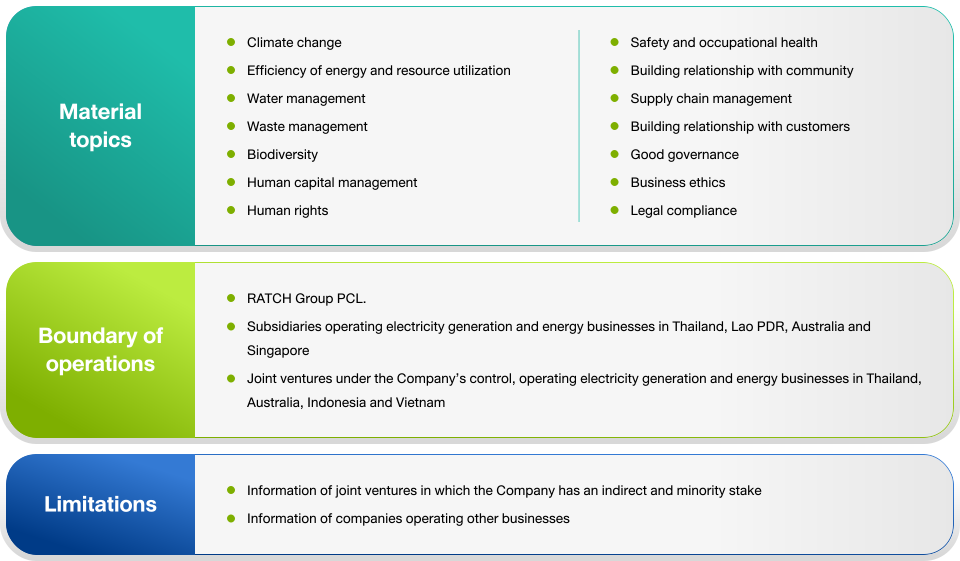
The Company identified the topics material to sustainability that may significantly impact the business operations, stakeholders, and long-term value creation. The process is aligned with the Global Reporting Initiative’s GRI 3: Material Topics standards and the double materiality approach, to cover both impact and business dimensions.
Scope of Materiality Assessment
The assessment process covers the operations of RATCH as the holding company, subsidiaries, and activities under the Company’s control or with significant influence at home and abroad. It takes into account impacts that may arise in the value chain, upstream to downstream.
Impact Assessment Methodology
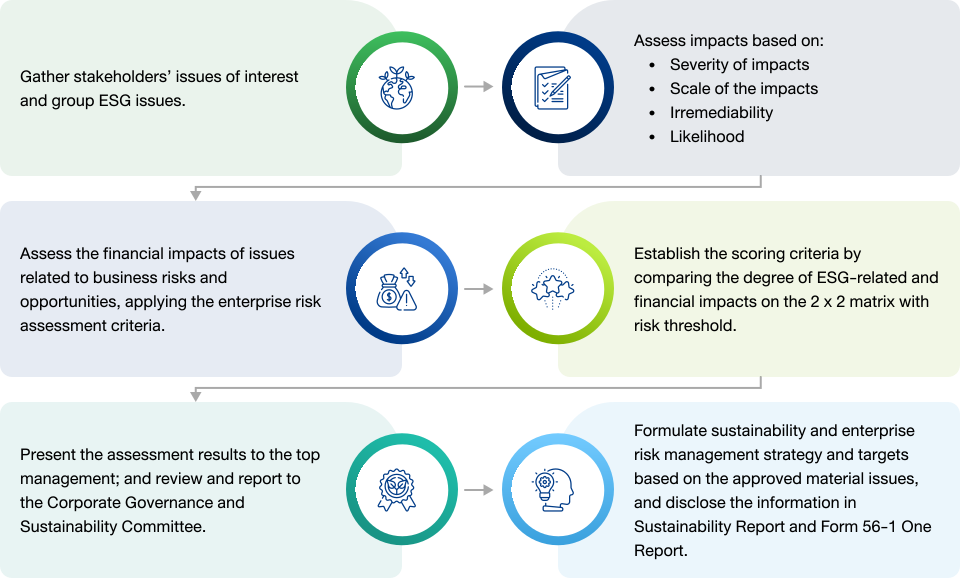
The results of stakeholder engagement assessment are brought into the impact assessment process as shown below:
Prioritization and Examination of Material Issues
The Company prioritizes material issues in line with the impact materiality under GRI 3: Material Topics 2021 standards, to ensure the specified issues reflect significant impacts of the Company Group’s business operations on the economy, the environment, and society.
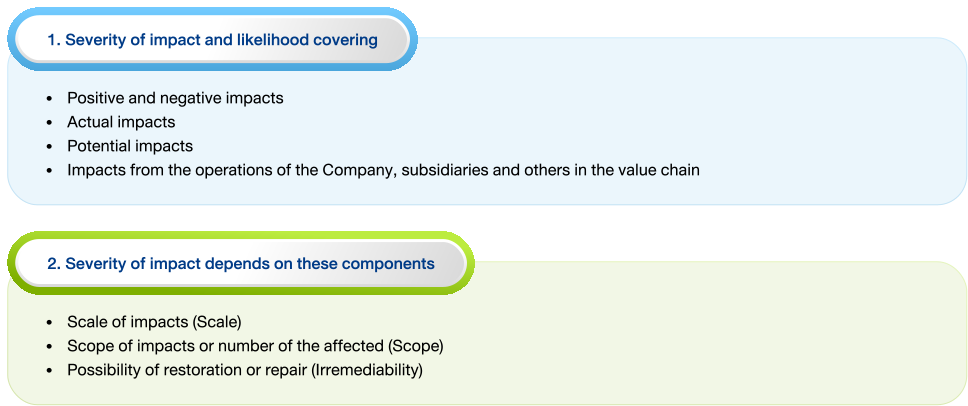
Impact-based Assessment Criteria
Each material issue is assessed according to:
Scoring and Threshold
The Company specifies the scoring system to support systematic exercise of discretion. The scores range from 1 to 5 for each criterion and material issues are prioritized accordingly to the total scores. Issues with high severity and/or scores in “High” level are identified as the organization’s material issues. The threshold is determined after the Management’s consideration and approval, for the alignment with the enterprise risk assessment criteria and the business context. Aside from the scoring mechanism, the Company deploys professional discretion in the consideration, taking into account the context of the electricity and energy industry, regulatory trends and stakeholder expectations.
Alignment of Stakeholder Engagement Process with Enterprise Risk Management
The scores are considered along with the issues coming from the stakeholder engagement process, the results of enterprise risk management (ERM) and operating results concerning greenhouse gas emissions, safety statistics and community complaints. The integration of information from various sources ensures the specified material topics reflect the dimensions of impacts and the Company Group’s strategic risks.

Review and Verification of Material Topics
The prioritization requires a review by the top management as well as sustainability and relevant departments, to make sure that the topics cover the Company Group’s activities. The Corporate Governance and Sustainability Committee then reviews and approves the assessment prior to the disclosure in Sustainability Report and annual reports. Such a process helps strengthen transparency, reliability and appropriate governance of materiality identification.

Continuous Review
RATCH reviews material topics on an annual basis and conducts additional reviews in light of major events such as changes in the regulatory landscape or climate conditions, corporate strategies and goals, and incidents that may cause significant impacts. The reviews are to ensure the material topics align with the business context and stakeholder expectations and reflect risks, opportunities and actual impacts of each particular period.

Material Topics
 Economic dimension |
 Social dimension |
 Environmental dimension |
 Governance dimension |
|---|---|---|---|
| Digital technology and innovation | Occupational health and safety | Greenhouse gases and climate change | Business ethics/corporate governance |
| Resilience of business model | Stakeholder engagement | Greenhouse gas emission reduction on path towards carbon neutrality/net-zero emissions | Changes to relevant business laws |
| Supply chain management | Human resource management | Air quality | Implementation and assessment of legal compliance |
| Sourcing of quality materials and equipment | Quality and safety of products/services | Energy and resource management | Data safekeeping, cybersecurity and AI application |
| Nurturing customer relationship | Caring for affected communities and community/society at large | Water and wastewater management | Management of crisis-induced risks |
| Opportunities in new businesses and competitiveness | Customer satisfaction | Biodiversity and ecosystem | Governance of subsidiaries and joint ventures |
| Efficiency of asset management | Respect for human rights | Management of waste and hazardous waste | |
| Reliability in electricity generation and revenue creation |