





Supervision Structure of Safety and Occupational Health Management
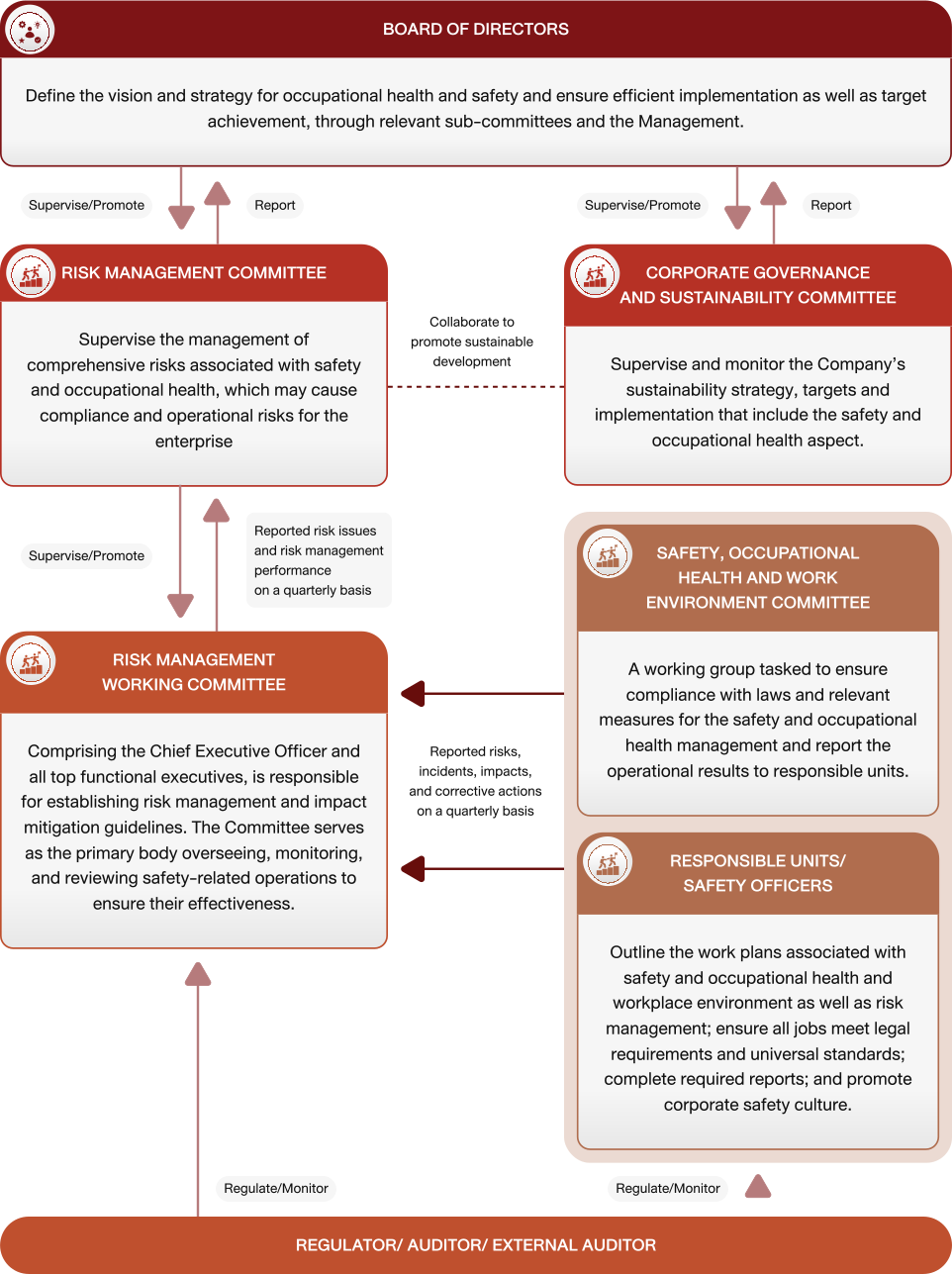
RATCH has clearly established the management structure of occupational safety and health. Under the structure, the Board of Directors defines the occupational safety and health policy, direction and targets and follows up on the implementation, while the Risk Management Committee oversees the comprehensive management of risks in all aspects and the Corporate Governance and Sustainability Committee supervises and monitors the overall implementation.
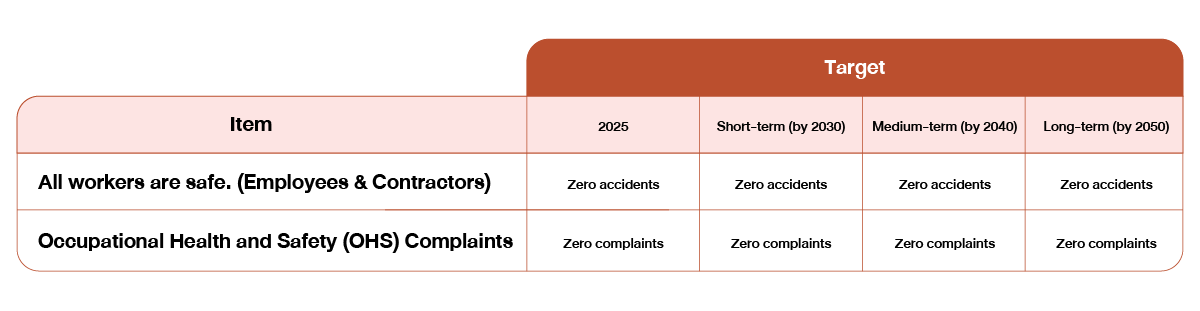
Safety action plan
The Group, through the Occupational Health, Safety and Environment Committees at each power plant and office, prepares annual occupational health and safety plans with a focus on systematic management and continuous improvement. The plans cover the review and enhancement of safety policies, workplace health and safety inspections and performance assessments, performance monitoring and risk management, development and implementation of safety training programs, emergency drills and response to incidents of various severity levels, compliance with applicable laws and regulatory requirements, as well as the promotion of a safety culture through communication and supporting activities. The results of implementation are reviewed and used to continuously improve and further develop the annual plans in a sustainable manner.
Occupational safety and health management system
The Company has defined the group-level safety policy and safety standards, monitored the implementation, and required reporting to the Board of Directors. In this regard, power plants are encouraged to develop an occupational health and safety management system that meets international standards and most of them have adhered to the ISO 45001:2018 principles and the Plan–Do–Check–Act (PDCA) methodology in formulating measures for workplace safety.
The occupational safety and health management has been integrated into the central Environmental and Social Management System (ESMS), which is the framework for overall supervision that encompasses the environmental, social, occupational safety and health aspects. RATCH has followed relevant laws enforced in the host countries of its operations and sought stakeholder engagement, to ensure systematic management of safety risks in line with universal standards and continuous improvement of performance which will help effectively prevent work-related injuries and illness.
| Power Plant | Certified |
|---|---|
| Ratchaburi | ISO 45001:2018 |
| Ratch Pattana Energy | ISO 45001:2018 |
| Hinkong Power | ISO 45001:2018 |
| Asahan- 1 | ISO 45001:2018 |
| Sahagreen Forest | T-OSH OSHMS:2019 (Platinum Level) |
| Sahacogen Green | T-OSH OSHMS:2019 (Platinum Level) |
More Info:
Safety management system
The Company Group focuses on preventive control rather than post-incident correction and puts in place the following preventive systems:
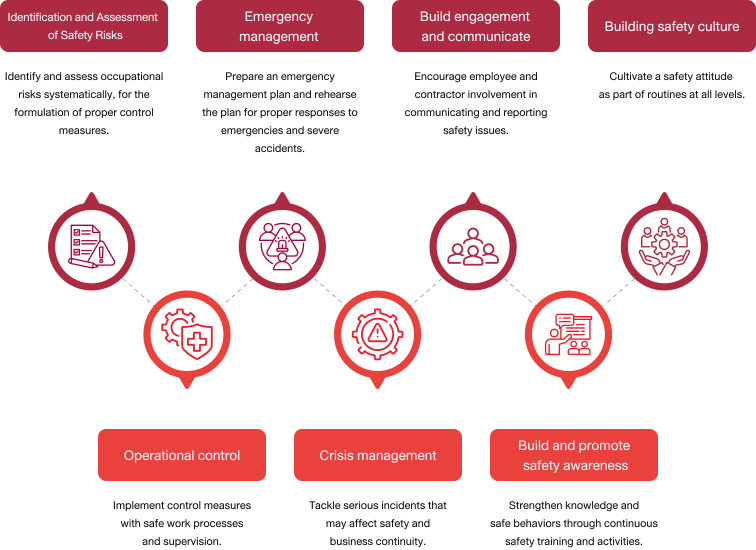
Identification and Assessment of Safety Risks
The risks in focus involve those in the power plant development stage, major maintenance and in the Management of Change (MOC) process. All power plants are required to impose control and preventive measures and consistently report the results according to the chain of command, when in concern are the jobs considered significant risks at the group level - work with high voltage electrical system, work in confined space, work on high ground, hot work, work with the steam and high pressure gas system, major maintenance and work sensitive to high temperature and severe weather conditions.
The assessment result is the basis for the preparation of the risk registry and formulation of technical and behavioral control measures. The result of the safety risk assessment concerning the entities in the reporting boundary is as follows:
Operational Control
The Company Group devises control measures according to the risk management hierarchy that consists of 5 components.
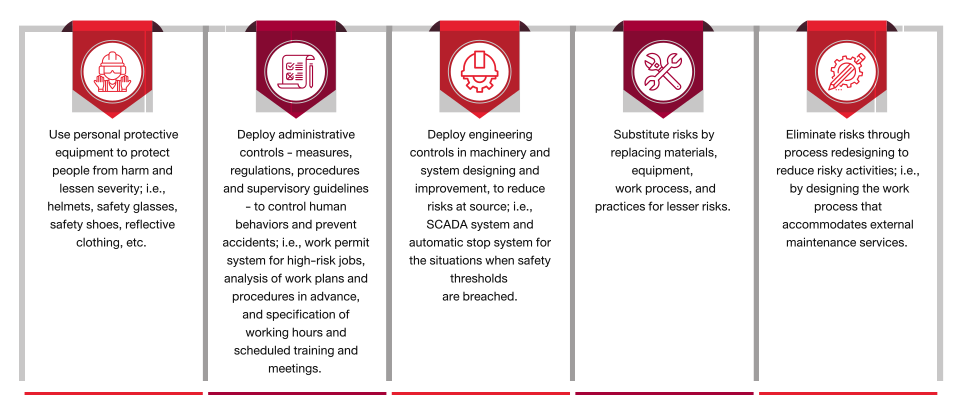
In addition, control measures are in place to minimize accidents before, during and after work as a way to test the efficiency of the control measures as well as arranged work procedures. Control measures also serve as an effective means to raise understanding and awareness among job operators. The safety rules are as follows:
Emergency Management and Prevention of Severe Accidents
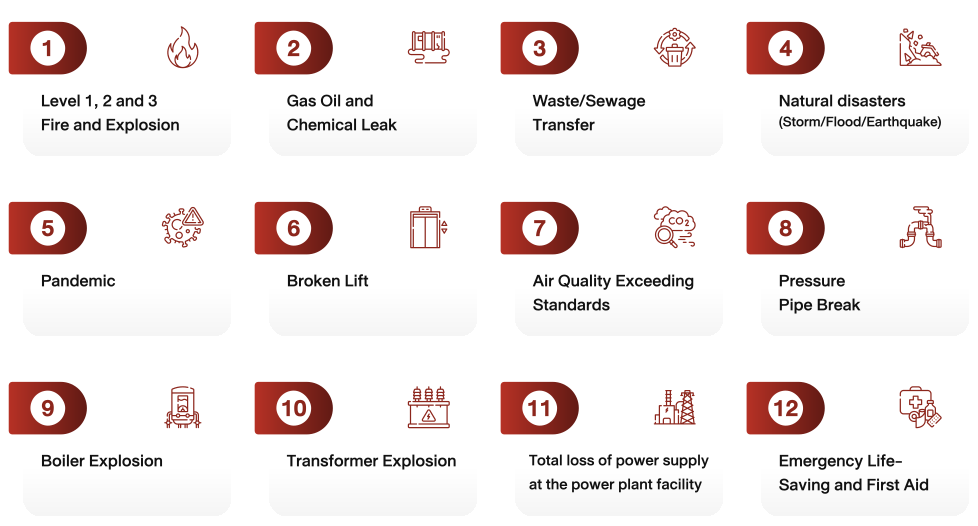
RATCH established emergency response plan and measures to prevent severe accidents in line with its operational risks. The plan clearly defines roles and responsibilities as well as response procedures and it is regularly rehearsed internally, with other entities, and with external parties. After the rehearsal, suggestions are considered for consistent improvement of the plan, to ensure effective responses which will mitigate impacts on employees, contractors, neighboring community, the environment and the Company’s assets as best as possible.
Emergency Response Drills
Crisis management
The Company has also prepared the Crisis Management Plan, Crisis Communication Plan and Business Continuity Plan for each business unit since 2018 and reviewed their suitability on a regular basis on when there is a change in activities or work processes. This will enable the Company to contain impacts and prevent business disruption.
| Issue | Guidelines |
|---|---|
| Management framework | Devise the business continuity management policy as the main framework for crisis management, covering the prevention, response, communication and business recovery, to ensure continuity of operations even in unexpected situations. |
| Governance structure | Form the Risk Management Working Committee for the supervision, monitoring and following up on crisis management. The Risk Management Committee shall be informed of the performance periodically or in the event of significant changes. |
| Roles and responsibilities | Coordinating the business continuity management and working together with the Crisis Management Committee. |
| Contingency Plan | Prepare and integrate the Crisis Management Plan, Crisis Communication Plan, and Business Continuity Plan. |
| Type | Severe natural disasters, fires, explosion, chemical leaks, cyberattacks and terrorist attacks |
| Communication | Clearly define the guidelines for crisis communication, covering two-way internal and external communication so that stakeholders have access to accurate information in a timely manner and feel comforted. |
| Review and improvement | Review and improve the Crisis Management Plan, Crisis Communication Plan, and Business Continuity Plan at least once a year or the in the event of significant changes, to keep the plans suitable and practical. |
| Building awareness | Build awareness and understanding in business continuity management among job operators at all levels on a regular basis and instill it into the corporate culture. |
More Info:
Business Continuity Plan
RATCH’s Business Continuity Plan (BCP) was devised in line with the ISO 22301 standardand designed to cover 3 situations that can halt business operations:

RATCH has consistently reviewed and tested the plan, to ensure the plan is practical and effective and aligned with the risks and impacts on critical functions. This process is part of the Enterprise Risk Management System and corporate governance for uninterrupted operations.
Employee engagement and communication on occupational safety and health
Employees are engaged with the occupational safety and health management through the Safety. The Company and power plants under the Company’s financial control which employ more than 50 employees have established their own committees, having the top executive as chairman. The members of the committees are executives representing the employers and the representatives of employees/suppliers. Security officers act as the committee secretary.The committee has scheduled the monthly meeting
| Power plant/ Office | Committee member (person) | |
|---|---|---|
| Employer | Employee | |
| RATCH Group | 3 | 4 |
| Ratchaburi | 6 | 7 |
| Ratch Cogeneration | 5 | 6 |
| Ratch Energy Rayong | 2 | 3 |
| Ratch Pathana Energy | 2 | 6 |
| Sahacogen Green | 1 | 4 |
| Sahagreen Forest | - | 7 |
| Hinkong Power | 3 | 3 |
Building and promoting awareness of occupational safety and health
RATCH continues to promote knowledge and awareness of occupational safety and health, along with holistic healthcare, to enhance workers’ well-being. The Company aims to cultivate a safety culture at all levels through communication, training, and continuous campaigns, ensuring that employees, contractors, and stakeholders have the knowledge and understanding to actively engage in the prevention of work-related accidents and illnesses. Key activities include Safety and Energy Day, Safety Talks, Safety Slogans, Safety Role Programs, Work Permit Systems (Safe Permit First), and the promotion of a proactive safety culture.
More Info:
Activities on occupational health and health promotion for employees and suppliers’ workers
The Company Group has continuously organized occupational health and health promotion activities for employees and suppliers’ workers, aiming to effectively prevent diseases. Annual medical examination has been arranged according to job risks, including the tests for NCDs, communicable diseases such as COVID-19, flu, tuberculosis, HIV/AIDS, and critical illness. The employees and suppliers’ workers identified with work-related illness or risks are monitored and cared for, to guard against illness that can affect their health condition and promote safe and sustainable work.
More Info:
Building occupational safety and health culture
The Company Group has continuously organized occupational health and health promotion activities for employees and suppliers’ workers, aiming to effectively prevent diseases. Annual medical examination has been arranged according to job risks, including the tests for NCDs, communicable diseases such as COVID-19, flu, tuberculosis, HIV/AIDS, and critical illness. The employees and suppliers’ workers identified with work-related illness or risks are monitored and cared for, to guard against illness that can affect their health condition and promote safe and sustainable work.

In addition, the Company promotes proactive management via the reporting of near misses and incidents involving failure of the production process or process safety event (PSE) which causes or nearly cause leakage, explosions, fires, releases of harmful substances, etc. that may affect people, assets, the environment and business continuity. The Company also welcomes safety suggestions (Safe Card) from employees and contractors that observe hazards and risks and suggest continuous improvement, considering this as a key mechanism in preventing accidents and promoting preventive safety culture at all levels and across the value chain.
Integration of safety into Environmental and Social Management System
The Company has integrated safety management into the Environmental and Social Management System (ESMS) which is prepared in line with the IFC Performance Standards, Equator Principles and ISO 45001:2018. It has been developed into a systematic safety management process that aims to protect the workers of Company Group and suppliers. The process covers risk identification and assessment, specification of control measures, work permits for risk areas, safety training and communication, preparation and responses to emergency situations, monitoring, and reporting.
The integration offers a tool to strategically manage safety risks and elevate the occupational safety to international standards, which will bolster value creation in the long term.
2025 Occupational Health and Safety: Targets & Performance
| Power Plant/ Office | Target in 2025 | Performance |
|---|---|---|
| RATCH | Lost Time Injuries = 0 |
|
| RGCO | Corporate KPI: TIFR< 1 |
|
| RCO | Corporate KPI:
|
|
| RER | Corporate KPI: Zero Accidents |
|
| RPE | Corporate KPI:
|
|
| SGN | Corporate KPI:
|
|
| SGF | Corporate KPI:
|
|
| HKP |
|
|
| Asahan-1 | Zero accident | No complaints related to occupational safety and health No work-related accidents occurred |
| RL | ||
| RAC |
Hours worked and accident statistic of the Head Office and Managed Entities under the Company’s Financial Control
| Indicators | Target in 2025 |
Performance | ||||
|---|---|---|---|---|---|---|
| 2025 | 2024 | 2023 | 2022 | |||
| Lost Time Injury Frequency Rate (LTIFR)/1,000,000 hours |
Employee | 0 | 0 | 0 | 0.63 | 0 |
| Contractor | 0.31 | 0 | 0.62 | 0 | ||
| Total | 0.19 | 0 | 0.62 | 0 | ||
| No. of lost-time injuries (cases) |
Employee | 0 | 0 | 0 | 1 | 0 |
| Contractor | 1 | 0 | 3 | 0 | ||
| Total | 1 | 0 | 4 | 0 | ||
| Man-hours | Employee | - | 1,898,673 | 1,780,305 | 1,588,769 | 1,562,207 |
| Contractor | 3,275,889 | 3,241,550 | 4,876,618 | 3,924,687 | ||
| Total | 5,174,562 | 5,021,855 | 6,465,386 | 5,486,894 | ||
Note: Major accident rates are calculated per 1,000,000 working hours.
The Company is committed to continuously enhancing its safety culture and working environment. Rather than relying solely on internal targets to measure success, we place significant emphasis on benchmarking our occupational incident statistics against international industry averages. This comparative approach enables us to formulate more robust and effective preventive measures.
In 2025, the Company benchmarked its safety performance against data from the U.S. Bureau of Labor Statistics (BLS), specifically targeting the Electric Power Generation, Transmission, and Distribution sector (NAICS 2211). While the industry average Lost Time Injury Frequency Rate (LTIFR) stood at 0.8 per 200,000 hours worked, the Company achieved a significantly lower LTIFR of just 0.04 per 200,000 hours worked.
RELEVANT POLICIES

Safety, Occupational Health and Working Environment Policy

Risk Management Policy

Corporate Sustainability Policy

Environmental and Social Policy

Human Rights Policy
Office Building’s Environmental Management Policy

Business Continuity Management Policy